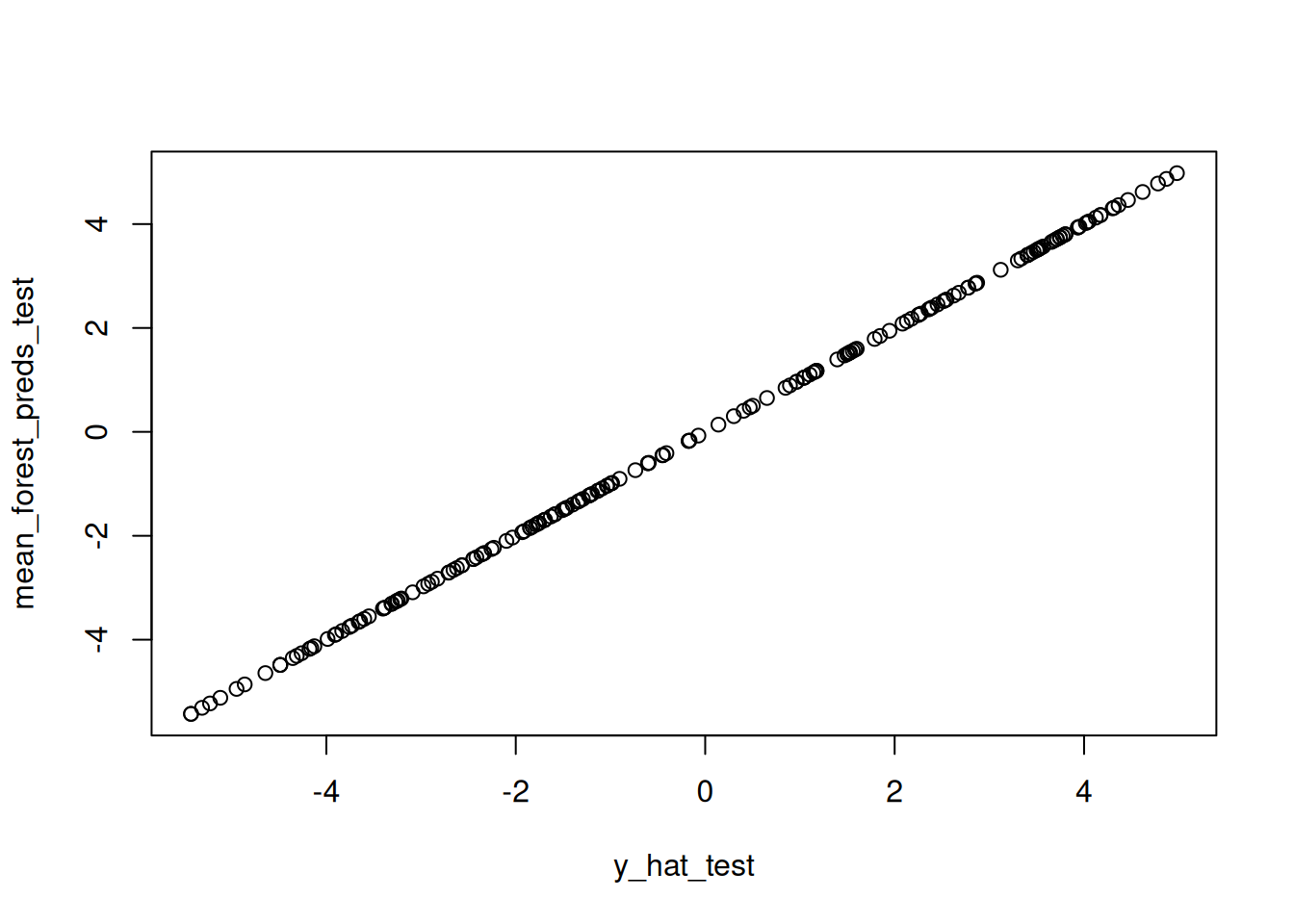
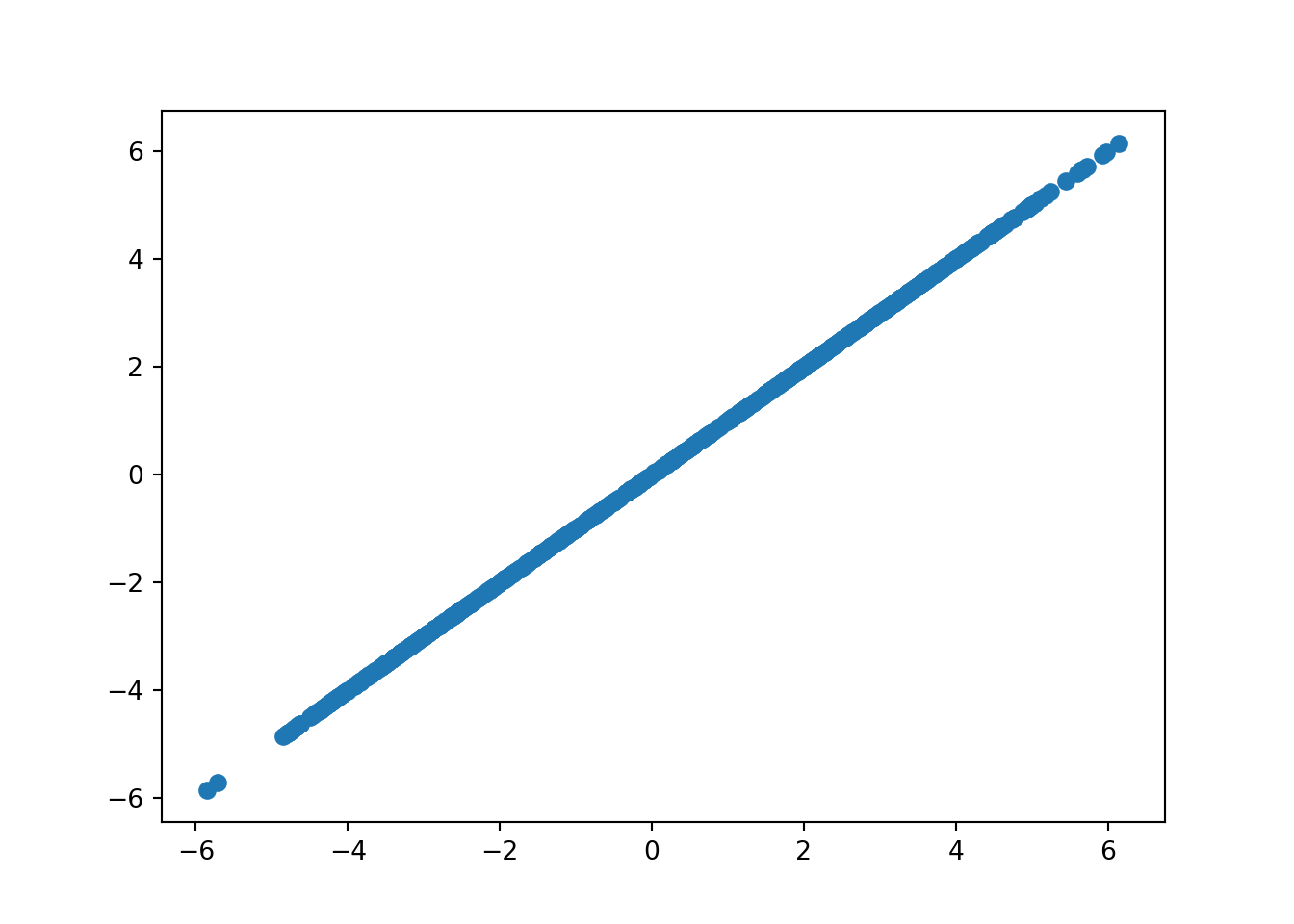
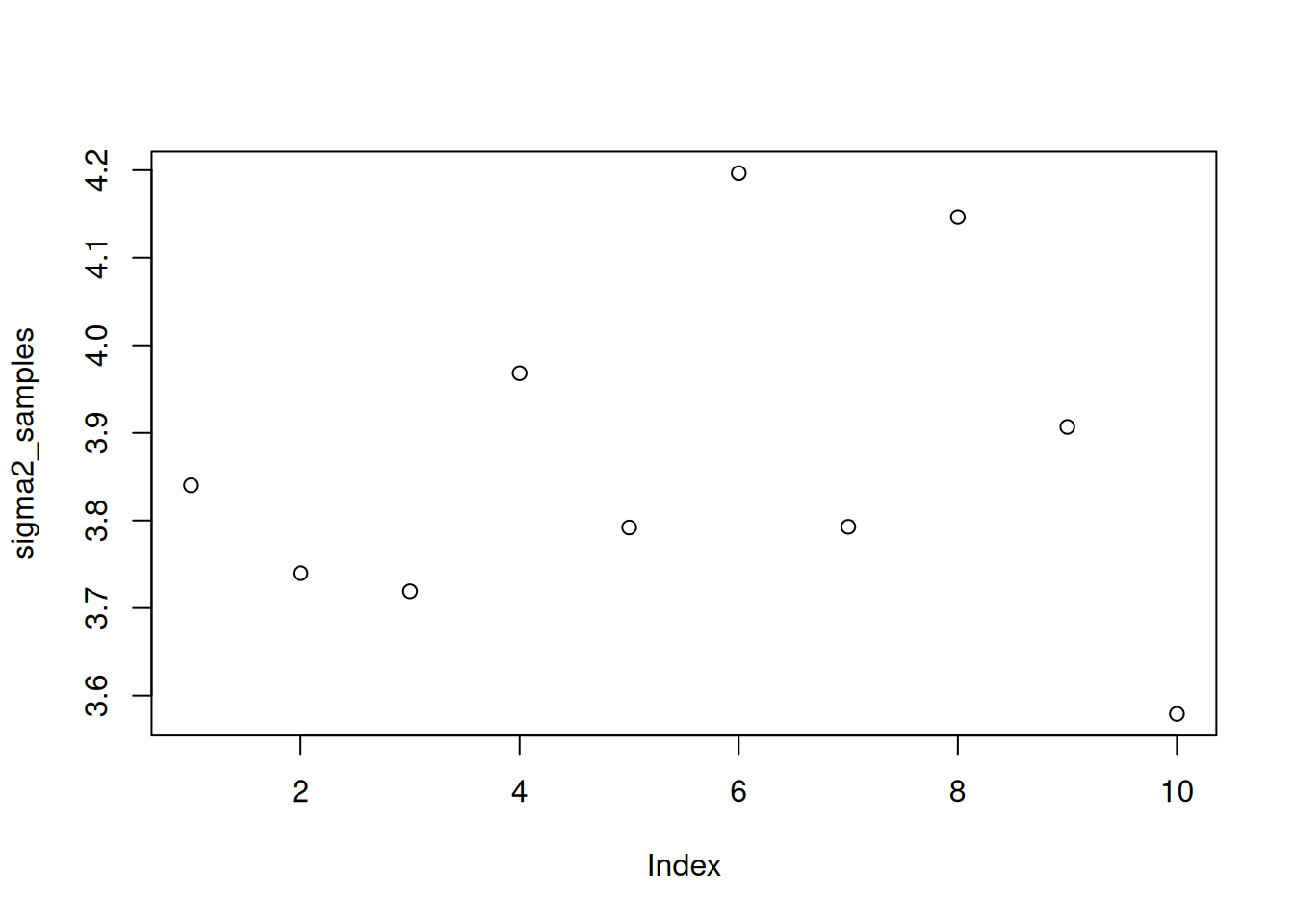
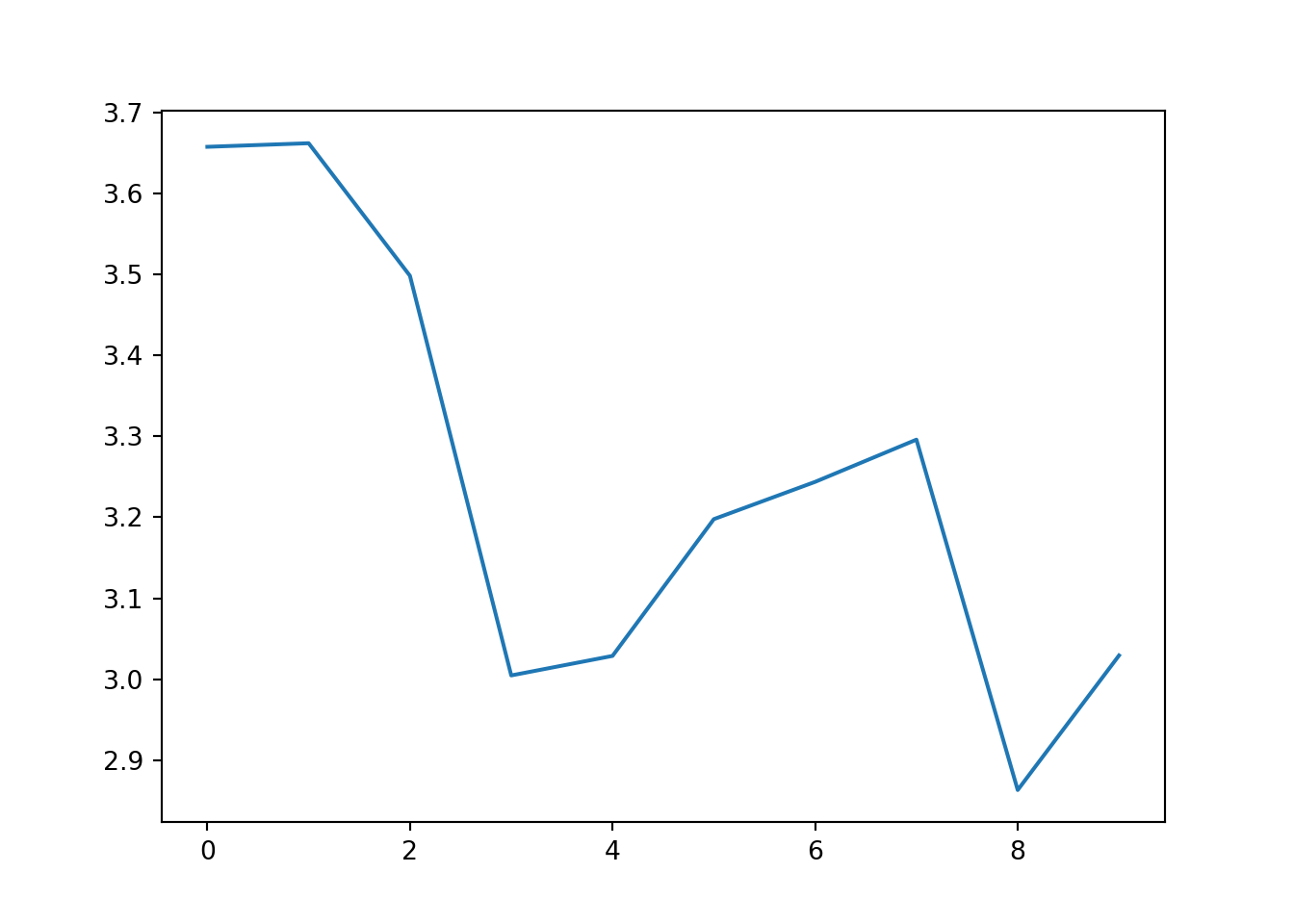
The vignettes in the Core Models section demonstrate how to fit different types of models in stochtree. This vignette walks through the interfaces for querying and extracting parameters from fitted stochtree models.
There are two primary interfaces for interacting with trained BART / BCF models:
Prediction: obtaining estimates for model terms that depend on covariates or other input data
In R, this is governed by an overloaded predict() function that specializes to BART and BCF so that predict(bart_model, ...) and predict(bcf_model, ...) return the requested predictions from the provided model
In Python, the BARTModel and BCFModel classes define predict() methods that can be called directly to obtain model predictions
Parameter Extraction: obtaining samples / traces of parametric model terms (such as the global error scale, \(\sigma^2\))
In R, this is governed by an overloaded extractParameter() function that specializes to BART and BCF so that extractParameter(bart_model, ...) and extractParameter(bcf_model, ...) return the requested samples from the provided model
In Python, the BARTModel and BCFModel classes define extract_parameter() methods that can be called directly to obtain parameter estimates
Prediction
The prediction interface is designed to be as flexible as the class of models that stochtree supports. The broad pattern that input data is provided for a given model and the corresponding predict method returns predictions for one or more model terms, with some optional user-requested transformations.
BART
The BART Prediction API differs stylistically in R and Python but provides the same functionality, which we annotate below
Covariates: all BART models require covariates so these are not optional in the predict method
3
Leaf basis: required if the original model was fit with a leaf basis
4
Random effects group labels: required if the original model was fit with an additive random effects term
5
Random effects basis: required if the original model was fit with an additive random effects term with custom basis (i.e. model_spec was not "intercept_only")
6
Whether predictions should return each posterior draw ('posterior') or be averaged across the posterior ('mean')
7
Which model terms to return predictions for. 'all' returns every model term available, 'y_hat' returns only outcome predictions, 'mean_forest' returns mean forest predictions (if available), 'rfx' returns random effects predictions (if available), and 'variance_forest' returns variance forest predictions (if available)
8
Whether predictions should be returned as-is from forest / RFX terms (scale = 'linear'), transformed to probabilities (scale = 'probability') or class labels (scale = 'class')
.predict() called from a reference to the sampled BART model
2
Covariates: all BART models require covariates so these are not optional in the predict method
3
Leaf basis: required if the original model was fit with a leaf basis
4
Random effects group labels: required if the original model was fit with an additive random effects term
5
Random effects basis: required if the original model was fit with an additive random effects term with custom basis (i.e. model_spec was not "intercept_only")
6
Whether predictions should return each posterior draw ('posterior') or be averaged across the posterior ('mean')
7
Which model terms to return predictions for. 'all' returns every model term available, 'y_hat' returns only outcome predictions, 'mean_forest' returns mean forest predictions (if available), 'rfx' returns random effects predictions (if available), and 'variance_forest' returns variance forest predictions (if available)
8
Whether predictions should be returned as-is from forest / RFX terms (scale = 'linear'), transformed to probabilities (scale = 'probability') or class labels (scale = 'class')
The data inputs to this API are fairly straightforward, but the type, terms and scale arguments merit some detailed (language-agnostic) explanation.
The BART overview page has a more in-depth review of the BART model, but the most complex version a BART model that stochtree supports is, mathematically, \[
\begin{aligned}
y_{i,j} \mid \Psi_{i,j} = \psi_{i,j}, X_{i,j} = x_{i,j}, W_{i,j} = w_{i,j} &\sim \mathcal{N}\left(w_{i,j} \vec{\gamma}_j + f(x_{i,j}, \psi_{i,j}), \sigma^2_0 \exp{h(x_{i,j})}\right),\\
f &\sim \text{BART}(\alpha_f, \beta_f, m_f), \\
h &\sim \text{logBART}(\alpha_h, \beta_h, m_h), \\
\vec{\gamma}_j &\sim \mathrm{N}(\vec{0}, \sigma^2_{\gamma} I).
\end{aligned}
\]
This model has:
Linear leaf regression on a basis \(\Psi\)
Forest-based heteroskedasticity, defined by a \(\text{logBART}\) prior on \(h\)
Additive random effects on basis \(W\)
Prediction Terms
Each of the individual options for the terms argument can be mapped to the equation above:
Requesting terms = 'all' will yield a list / dictionary with each of the terms above stored as separate entries. For models without a variance forest, terms = 'variance_forest' will be ignored. For models without random effects, terms = 'rfx' will be ignored and y_hat collapses to \(f(x_{i}, \psi_{i})\). For models without leaf regression, mean_forest and y_hat collapse to \(f(x_i)\).
Prediction Type
If a BART model has been sampled for \(mc\) iterations, then most of the above terms will be \(n \times mc\) matrices, where \(n\) is the number of rows in X, representing a posterior distribution over \(f\), \(h\) or the conditional outcome mean. This can be converted to a “simple” \(n\)-dimensional posterior mean (useful for prediction when terms = 'y_hat', for example) by averaging over the \(mc\) columns. This use case is common enough that stochtree will perform the aggregation before returning to users if type = 'mean' is specified.
Prediction Scale
In addition to the Gaussian model for continuous outcomes in the equation above, stochtree supports modeling binary outcomes through a probit link and ordinal outcomes through a cloglog link. Both of these models apply transformations to model discrete outcomes with continuous forest predictions, and the scale argument lets users determine which transformation (if any) to apply to model predictions.
Probit
The probit model precludes a variance forest, but works with both random effects and leaf regression. Specifying scale = 'linear' returns predictions as returned by the mean forest and random effects terms, scale = 'probability' converts the predictions into that term’s contribution to the conditional probability of y = 1, and scale = 'class' returns the category index with the highest predicted probability.
The cloglog model precludes a variance forest, random effects, or leaf regression. Specifying scale = 'linear' returns predictions as returned by the mean forest, scale = 'probability' converts the predictions into the conditional probability of each outcome category, and scale = 'class' returns the category index with the highest predicted probability.
Covariates: all BCF models require covariates so these are not optional in the predict method
3
Treatment: all BCF models require treatment so this is not optional in the predict method
4
Propensity: required if the original model was fit with a user-supplied propensity score
5
Random effects group labels: required if the original model was fit with an additive random effects term
6
Random effects basis: required if the original model was fit with an additive random effects term with custom basis (i.e. model_spec was not "intercept_only")
7
Whether predictions should return each posterior draw ('posterior') or be averaged across the posterior ('mean')
8
Which model terms to return predictions for. 'all' returns every model term available, 'y_hat' returns only outcome predictions, 'mu' returns prognostic forest predictions, 'tau' returns treatment effect forest predictions (and \(\tau_0\) intercept, if available), 'prognostic_forest' returns prognostic forest predictions and any random intercepts modeled by a random effects model_spec of 'intercept_only' or 'intercept_plus_treatment', 'cate' returns treatment effect forest predictions and any random treatment effect modeled by a random effects model_spec of 'intercept_plus_treatment', 'rfx' returns random effects predictions (if available), and 'variance_forest' returns variance forest predictions (if available)
9
Whether predictions should be returned as-is from forest / RFX terms (scale = 'linear'), transformed to probabilities (scale = 'probability') or class labels (scale = 'class')
.predict() called from a reference to the sampled BART model
2
Covariates: all BCF models require covariates so these are not optional in the predict method
3
Treatment: all BCF models require treatment so this is not optional in the predict method
4
Propensity: required if the original model was fit with a user-supplied propensity score
5
Random effects group labels: required if the original model was fit with an additive random effects term
6
Random effects basis: required if the original model was fit with an additive random effects term with custom basis (i.e. model_spec was not "intercept_only")
7
Whether predictions should return each posterior draw ('posterior') or be averaged across the posterior ('mean')
8
Which model terms to return predictions for. 'all' returns every model term available, 'y_hat' returns only outcome predictions, 'mu' returns prognostic forest predictions, 'tau' returns treatment effect forest predictions (and \(\tau_0\) intercept, if available), 'prognostic_forest' returns prognostic forest predictions and any random intercepts modeled by a random effects model_spec of 'intercept_only' or 'intercept_plus_treatment', 'cate' returns treatment effect forest predictions and any random treatment effect modeled by a random effects model_spec of 'intercept_plus_treatment', 'rfx' returns random effects predictions (if available), and 'variance_forest' returns variance forest predictions (if available)
9
Whether predictions should be returned as-is from forest / RFX terms (scale = 'linear'), transformed to probabilities (scale = 'probability') or class labels (scale = 'class')
The data inputs to this API are fairly straightforward, but the type, terms and scale arguments merit some detailed (language-agnostic) explanation.
The BCF overview page has a more in-depth review of the BCF model, but the most complex version a BCF model that stochtree supports is, mathematically, \[
\begin{aligned}
y_{i,j} \mid - &\sim \mathcal{N}\left(\gamma_{0,j} + f_0(x_{i,j}) + \gamma_{1,j} z_{i,j} + \left(b_1 z_{i,j} + b_0 (1-z_{i,j}) \right) \left[\tau_0 + t(x_{i,j})\right], \sigma^2_0 \exp{h(x_{i,j})}\right),\\
f_0 &\sim \text{BART}(\alpha_0, \beta_0, m_0), \\
t &\sim \text{BART}(\alpha_t, \beta_t, m_t), \\
h &\sim \text{logBART}(\alpha_h, \beta_h, m_h), \\
\tau_0 &\sim \mathcal{N}(0, \sigma^2_{\tau}), \\
b_0, b_1 &\sim \mathcal{N}(0, 1/2), \\
\gamma_{0,j}, \gamma_{1,j} &\sim \mathrm{N}(0, \sigma^2_{\gamma}).
\end{aligned}
\]
This model has:
Binary treatment with adaptive coding
Treatment effect function decomposed into parametric (\(\tau_0\)) and nonparametric (\(t(X)\)) terms (i.e. the sample_intercept option in the treatment_effect_forest_params list / dictionary)
Forest-based heteroskedasticity
Additive random effects on the intercept_plus_treatment basis of \([1,Z]\)
Prediction Terms
Each of the individual options for the terms argument can be mapped to the equation above:
Requesting terms = 'all' will yield a list / dictionary with each of the terms above stored as separate entries. For models without a variance forest, terms = 'variance_forest' will be ignored. For models without random effects, terms = 'rfx' will be ignored and y_hat collapses to \(f_0(x_{i,j}) + \left(b_1 z_{i,j} + b_0 (1-z_{i,j}) \right) \left[\tau_0 + t(x_{i,j})\right]\), and both 'mu' and 'prognostic_function' as well as 'tau' and 'cate' will be the same.
As with BART, stochtree will average over posterior samples before returning to users if type = 'mean' is specified.
Prediction Scale
In addition to the Gaussian model for continuous outcomes in the equation above, stochtree supports modeling binary outcomes through a probit link, and the scale argument lets users determine which transformation (if any) to apply to model predictions.
The probit model precludes a variance forest, but works with random effects and most other BCF modeling features. Specifying scale = 'linear' returns predictions as returned by the mean forest and random effects terms, scale = 'probability' converts the predictions into that term’s contribution to the conditional probability of y = 1, and scale = 'class' returns the category index with the highest predicted probability.
Parameter Extraction
Most BART and BCF models include one or more parametric terms, stored internally as vectors / arrays. Similarly, BART and BCF models often cache predictions for forest terms internally during sampling. stochtree provides a standard API for extracting these samples from fitted BART / BCF models.
BART
The BART parameter extraction API differs stylistically in R and Python but provides the same functionality, which we annotate below
Which internal model samples to extract. Options include "sigma2", "global_error_scale", "sigma2_global", "sigma2_leaf", "leaf_scale", "y_hat_train", "y_hat_test", "sigma2_x_train", "var_x_train", "sigma2_x_test", "var_x_test", "cloglog_cutpoints", "cutpoints"
bart.BARTModel.extract_parameter( term,)
1
.extract_parameter() called from a reference to the sampled BART model
2
Which internal model samples to extract. Options include "sigma2", "global_error_scale", "sigma2_global", "sigma2_leaf", "leaf_scale", "y_hat_train", "y_hat_test", "sigma2_x_train", "var_x_train", "sigma2_x_test", "var_x_test", "cloglog_cutpoints", "cutpoints"
This method extracts a vector, matrix, or array of samples from a BART model, queried by name. Random effects are handled by a separate extract_parameter_samples method attached to the underlying RandomEffectsContainer object due to the complexity of the random effects parameters. If the requested model term is not found, an error is thrown. The following conventions are used for parameter names:
Global error variance: "sigma2", "global_error_scale", "sigma2_global"
Leaf scale: "sigma2_leaf", "leaf_scale"
In-sample mean function predictions: "y_hat_train"
Which internal model samples to extract. Options include "sigma2", "global_error_scale", "sigma2_global", "sigma2_leaf_mu", "leaf_scale_mu", "mu_leaf_scale", "sigma2_leaf_tau", "leaf_scale_tau", "tau_leaf_scale", "adaptive_coding", "y_hat_train", "y_hat_test", "tau_hat_train", "tau_hat_test", "tau_0", "treatment_intercept", "tau_intercept", "sigma2_x_train", "var_x_train", "sigma2_x_test", "var_x_test"
bcf.BCFModel.extract_parameter( term,)
1
.extract_parameter() called from a reference to the sampled BCF model
2
Which internal model samples to extract. Options include "sigma2", "global_error_scale", "sigma2_global", "sigma2_leaf_mu", "leaf_scale_mu", "mu_leaf_scale", "sigma2_leaf_tau", "leaf_scale_tau", "tau_leaf_scale", "adaptive_coding", "y_hat_train", "y_hat_test", "tau_hat_train", "tau_hat_test", "tau_0", "treatment_intercept", "tau_intercept", "sigma2_x_train", "var_x_train", "sigma2_x_test", "var_x_test"
This method extracts a vector, matrix, or array of samples from a BART model, queried by name. Random effects are handled by a separate extract_parameter_samples method attached to the underlying RandomEffectsContainer object due to the complexity of the random effects parameters. If the requested model term is not found, an error is thrown. The following conventions are used for parameter names:
Global error variance: "sigma2", "global_error_scale", "sigma2_global"
Adaptive coding parameters: "adaptive_coding" (returns both the control and treated parameters jointly, with control in the first row and treated in the second row)
In-sample mean function predictions: "y_hat_train"